PLATFORMS / Aurillac
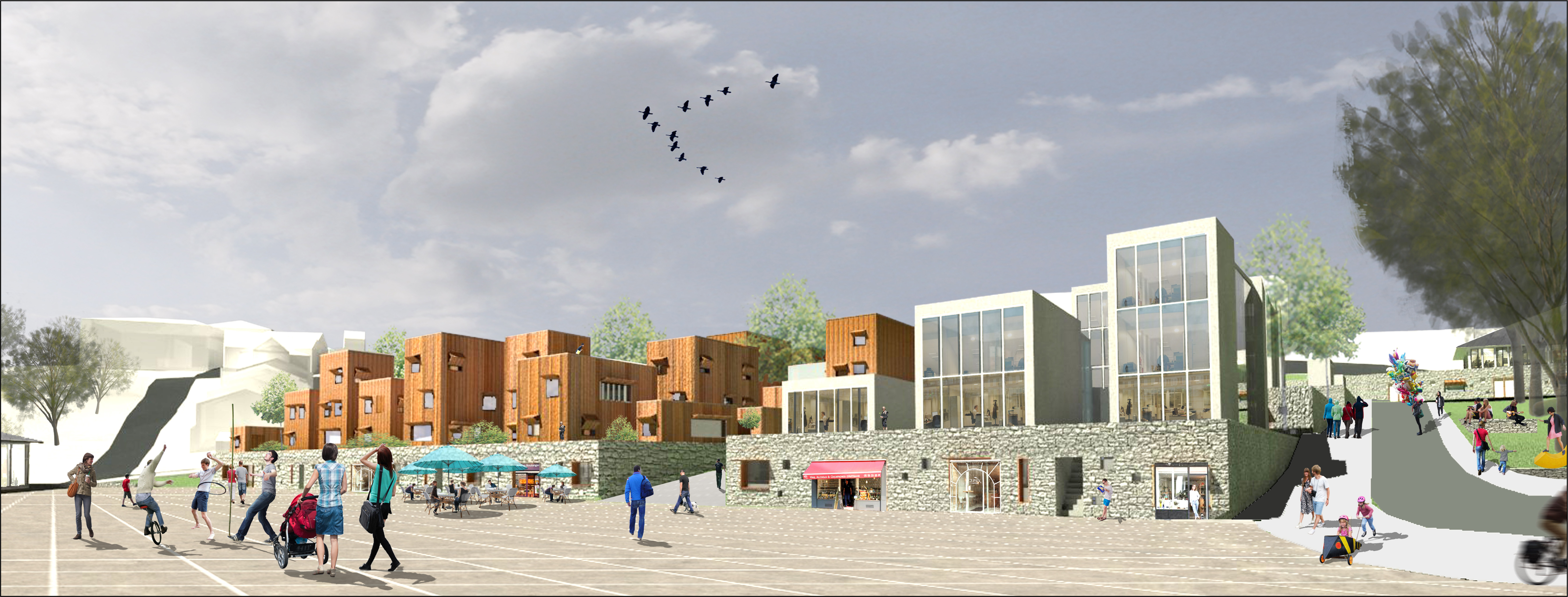
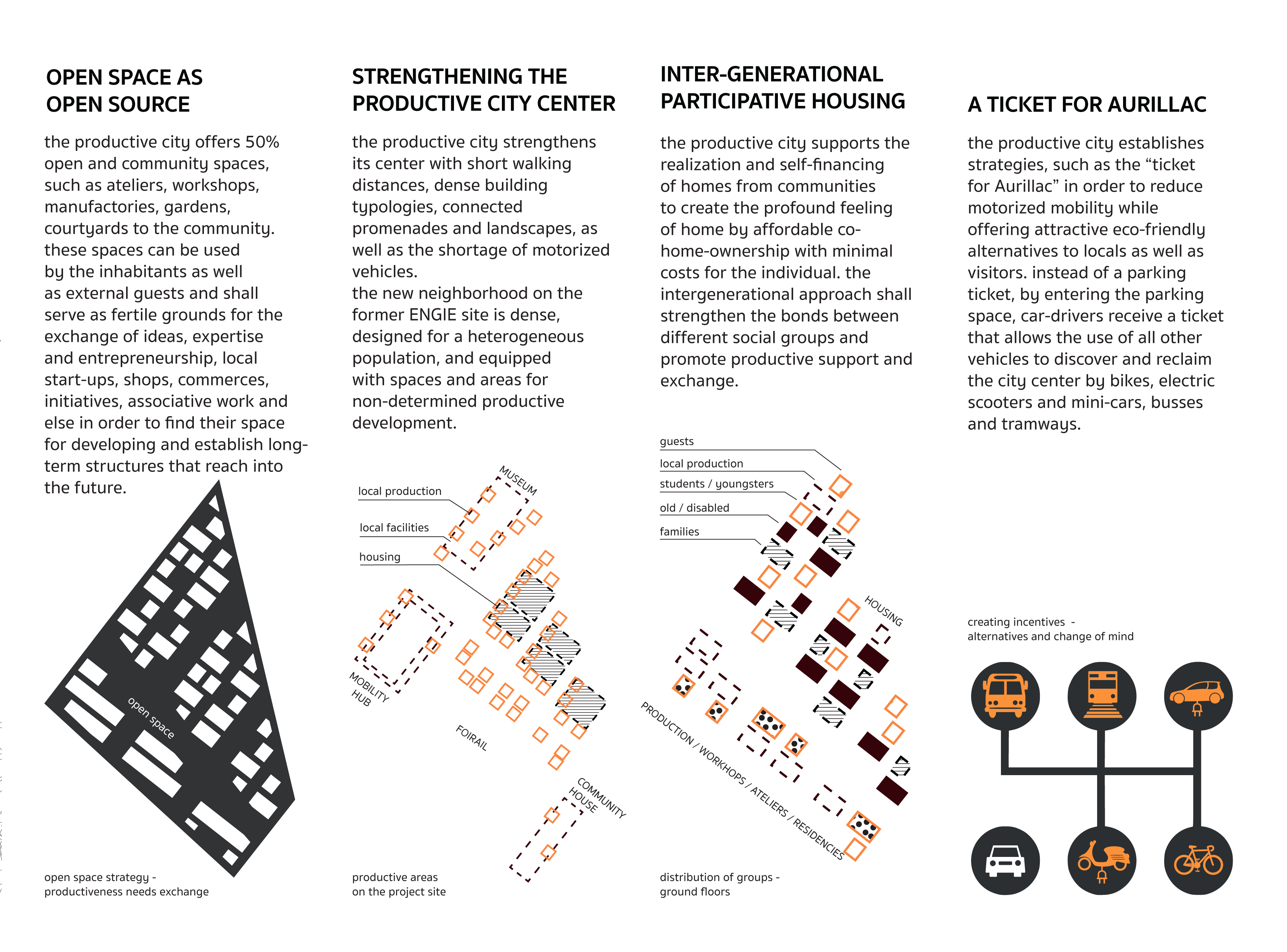
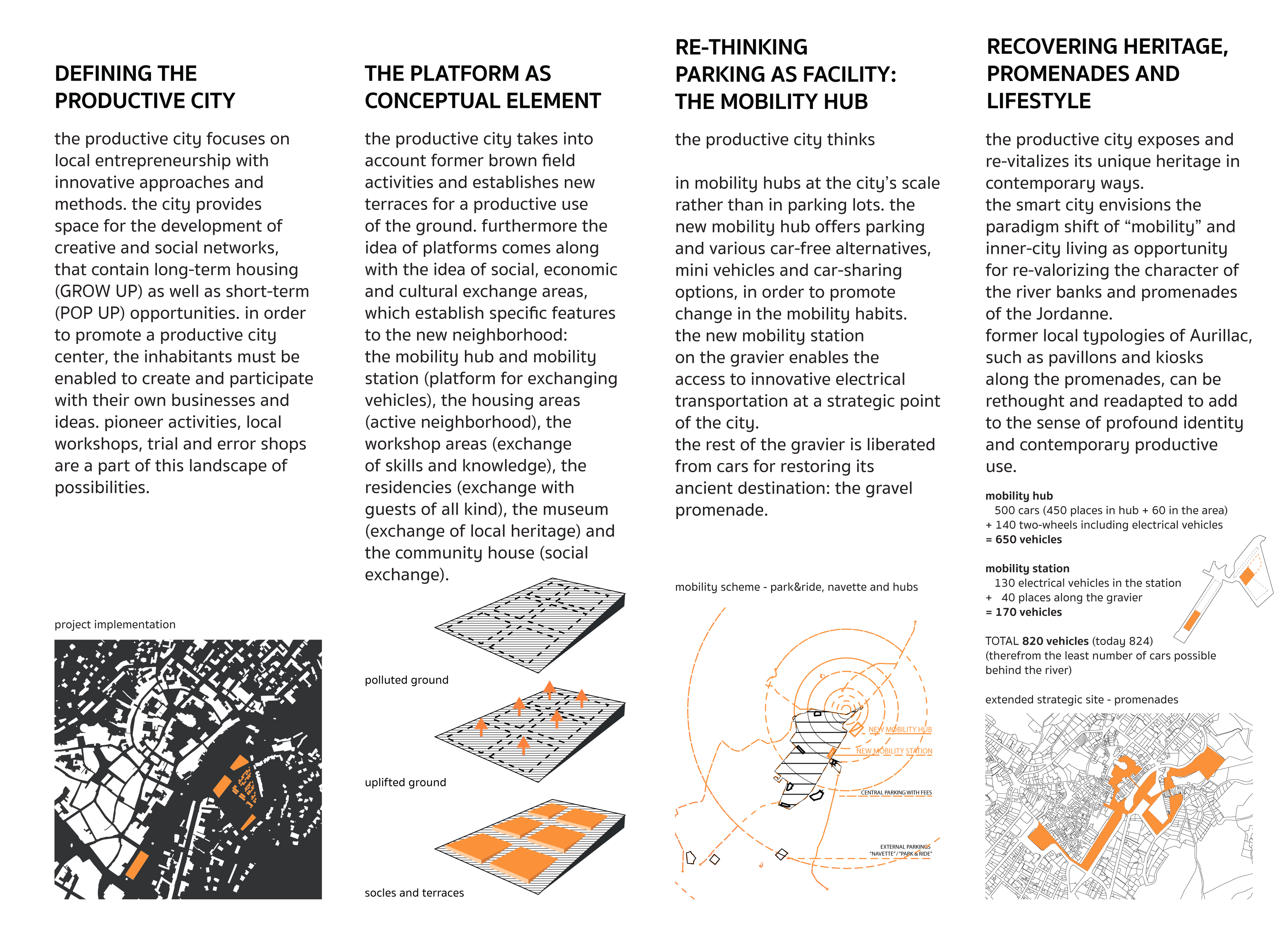
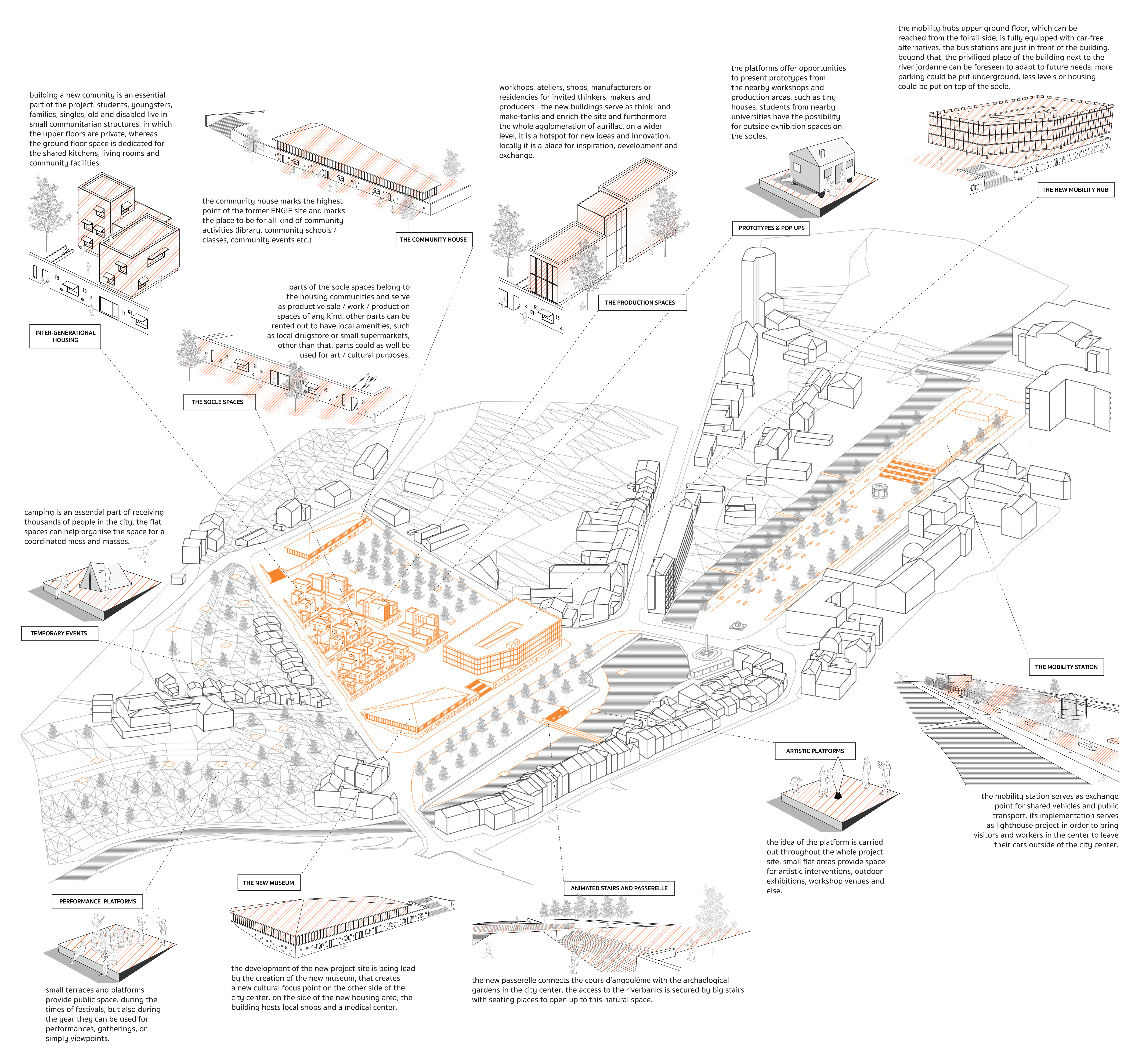
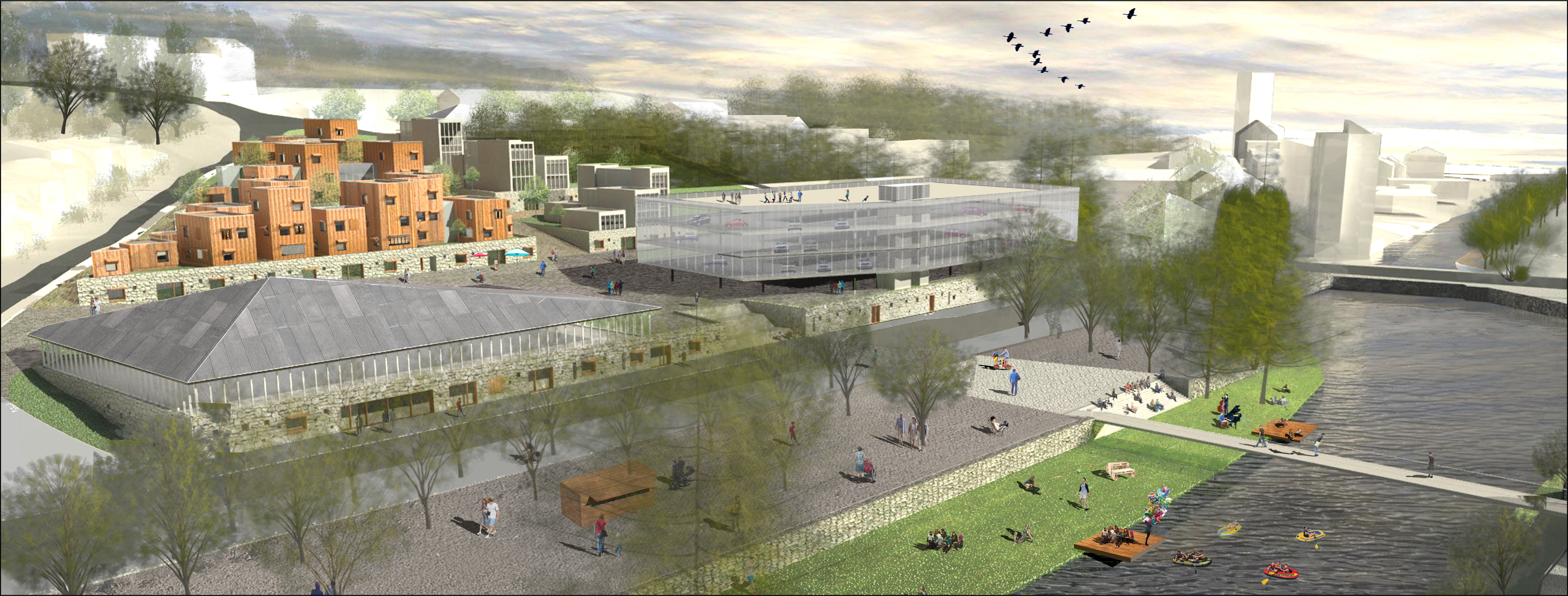
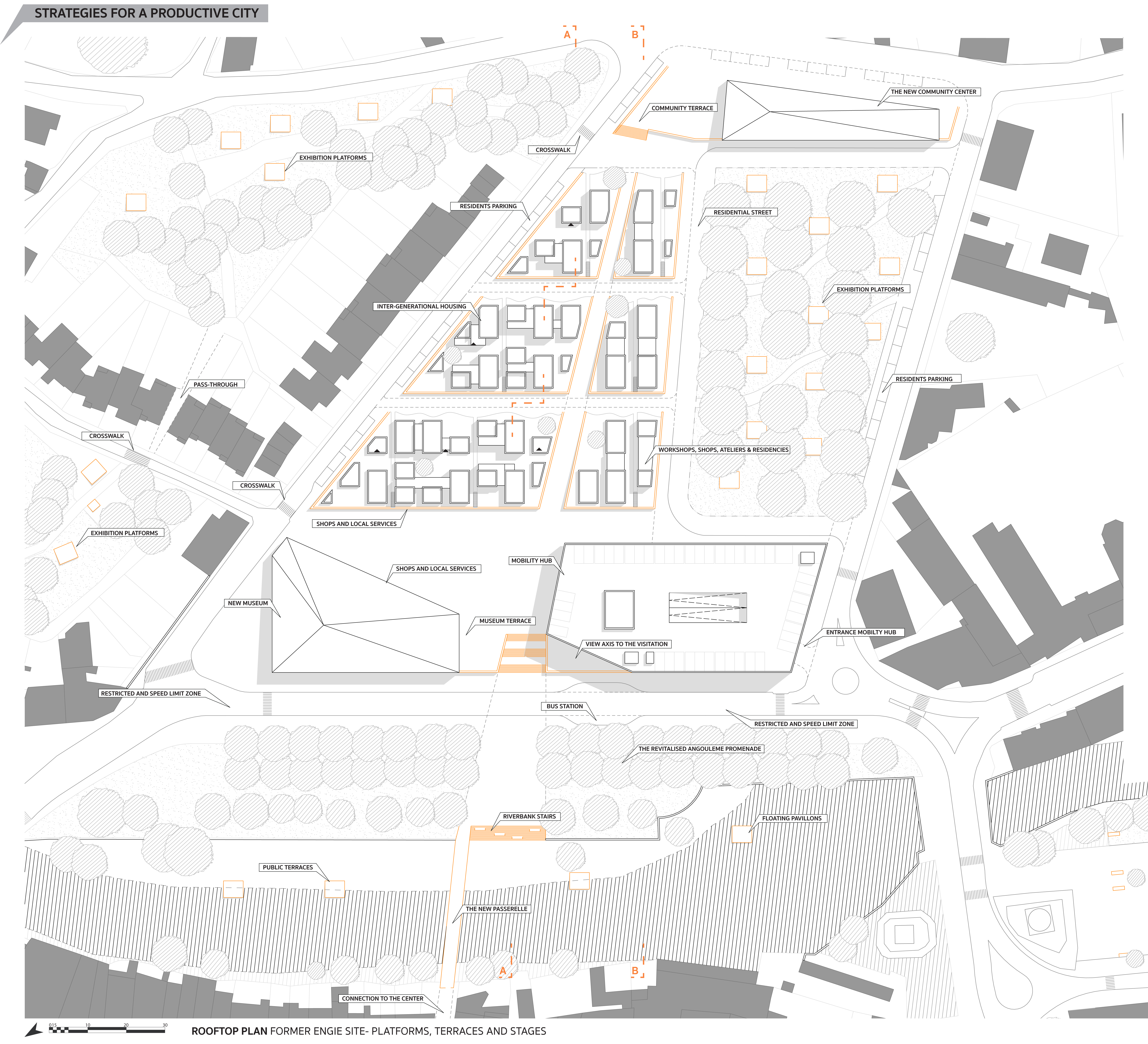
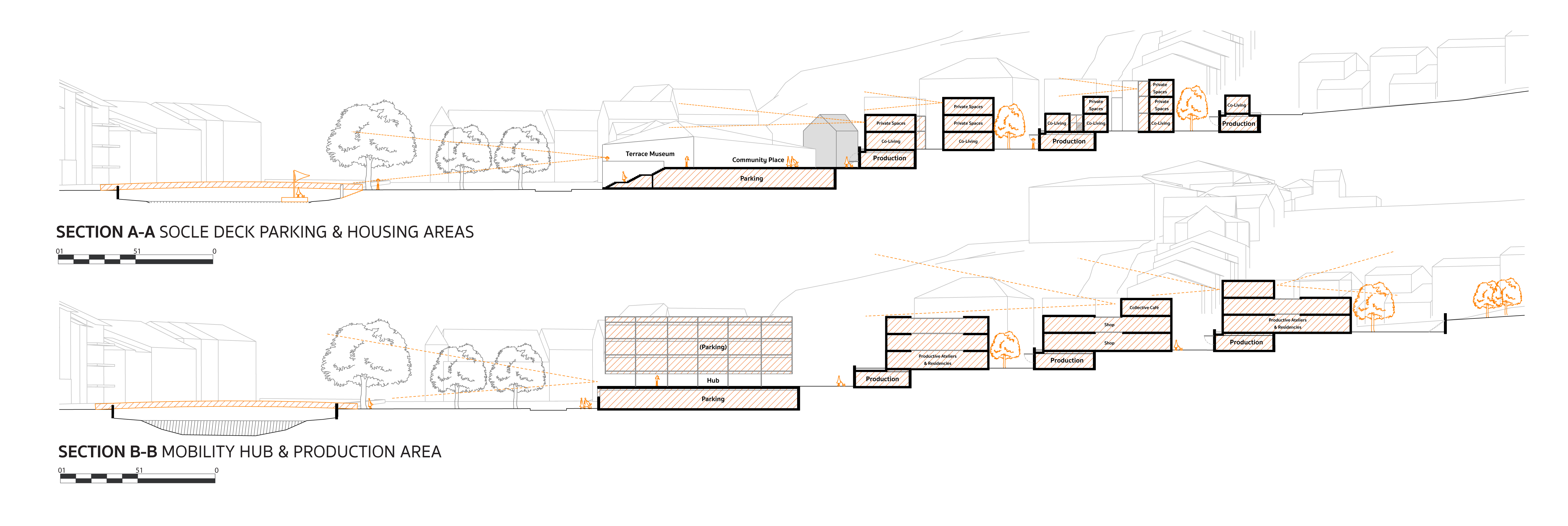
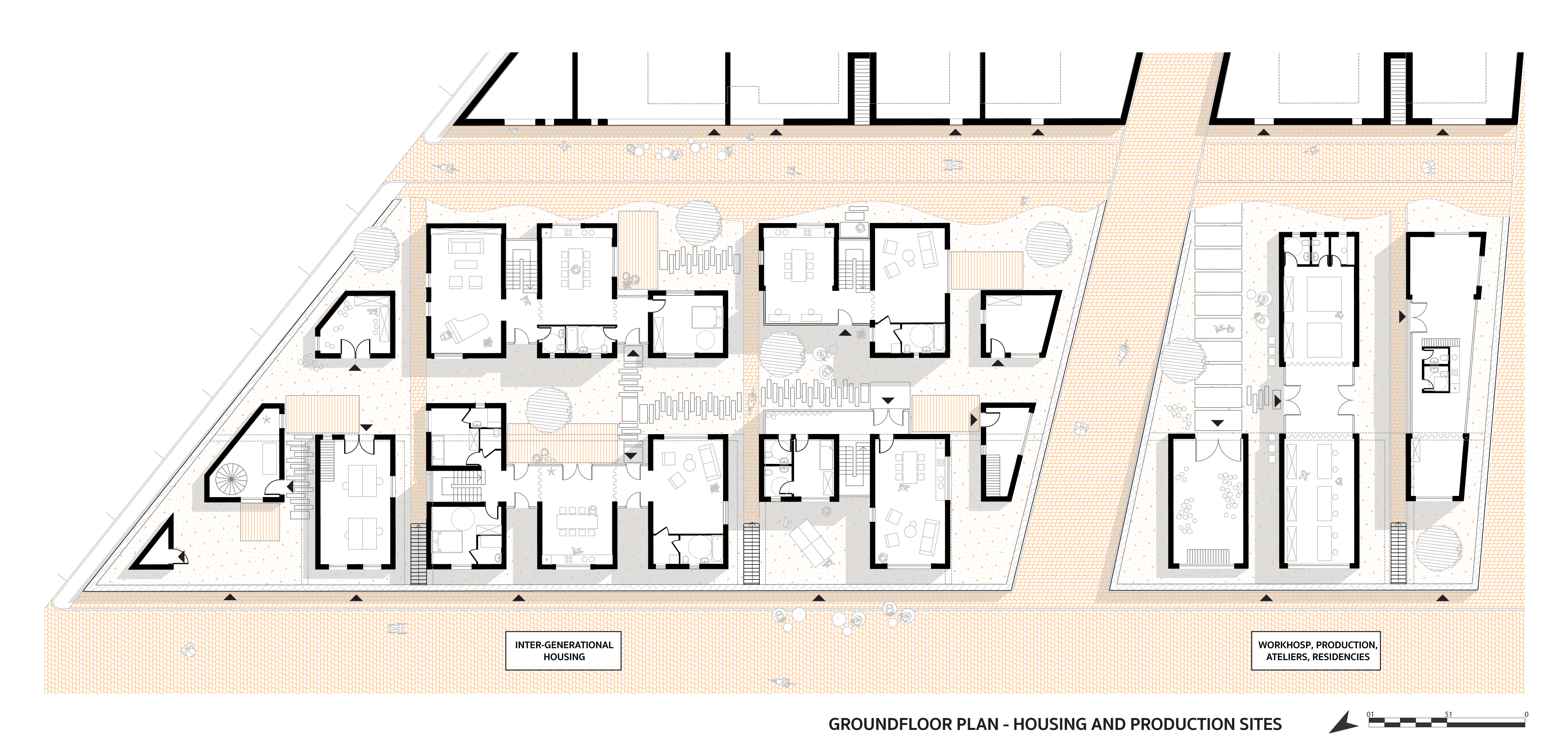
The productive city strengthens its center with short walking distances, dense typologies, connected landscapes, and the shortage of motorized vehicles. It focuses on local entrepreneurship and provides space for the development of social networks (long-term housing / short-term opportunities). To promote productiveness, the inhabitants are enabled to create and participate with own businesses and ideas: pioneer activities, local workshops, trial-and-error shops create a landscape of possibilities. The productive city takes into account former brownfield activities and establishes new terraces for a productive use of the ground. The platforms establish specific features for the neighborhood: mobility hub (platforms for exchanging vehicles), housing (active neighborhood), workshops (exchange of skills and knowledge), residencies (exchange with guests), museum (exchange of heritage) and community house (social exchange). It thinks in mobility hubs rather than parking lots – the new mobility station enables access to innovative electrical transportation at a strategic point of the city. It revitalizes its unique heritage in contemporary ways and offers open and community spaces (ateliers, workshops, manufactories, gardens, courtyards) that serve as fertile grounds for the exchange of ideas, expertise and entrepreneurship. The productive city supports the realization and self-financing of homes by communities with affordable co-home-ownership projects; the intergenerational homes contain different social groups and promote productive support and exchange.